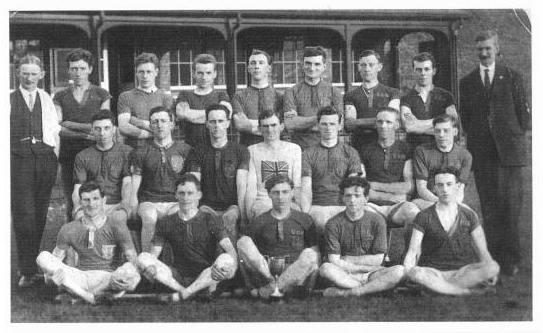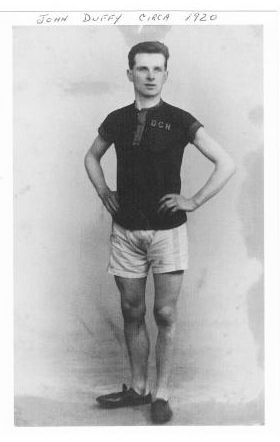
Durham City Harriers was established in 1907 when the headquarters for the club was in the Criterion Hotel, (now the Coach & Eight at the end of Framwellgate Bridge). One successful member in those early days was George Lee who competed for Britain at the 1912 Stockholm Olympics in both the 5,000 m and 10,000 m. He also represented England in the International Cross-Country Championships in Paris in 1913 where he placed third.
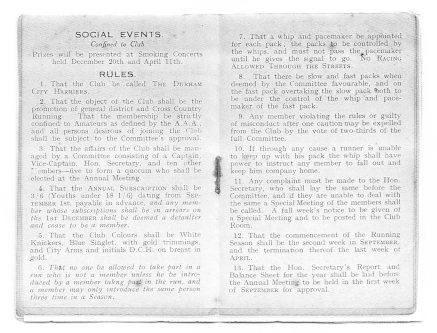
Running with Durham City Harriers in the period between the wars was obviously a very different experience to what it is now. Club fees in 1928 were 3s 6d for seniors and 1s 6d for youths. Runners would meet at 8pm on Tuesdays and Thursdays. The following points, taken from the rule book, give an interesting insight into running at that time:
“7. That a whip and pacemaker be appointed for each pack; the packs to be controlled by the whips and must not pass the pacemaker until he gives the signal to go. NO RACING THROUGH THE STREETS.
8. That there be slow and fast packs when deemed by the Committee favourable, and on the fast pack overtaking the slow pack both to be under the control of the whip and pacemaker of the fast pack.
9. If through any cause a runner is unable to keep up with his pack the whip shall have power to instruct any member to fall out and keep him company home.”
The club was reformed in 1972. The founding members were Neville Rutherford (Treasurer), Joe McMahon (Secretary) and Norman Carnigham (Chairman). Neville and Joe were originally members of Gateshead Harriers. They were soon joined by a number of other athletes including Ronnie Woods, Paul Gibson, Cliff Featherstone and Bryan Mackay. The club was all male at the time and there were no juniors. The early club colours were blue and yellow vests but it was not long before this changed to bright orange, the new colour being introduced by Bryan.
In the early 1970s, the club met at Maiden Castle before relocating to Framwellgate Moor Comprehensive School at which point the number of juniors in the club began to grow noticeably. Membership increased during the running boom of the 1980s and the club became increasingly successful in the Northern area. However, discontentment with facilities led to the search for another venue and the club moved to Durham Johnston School, at Crossgate Moor, where they remained for most of the 1990s. Eventually a decision was taken to move back to Maiden Castle, attracted by the first rate facilities offered by the University, encouraging closer links with the student population.